Setback requirements come from your local zoning code — not the building code. This means setbacks apply to every shed, even those too small to need a building permit. The most common setback in the U.S. is 5 feet from rear and side property lines, but your specific zone may differ.
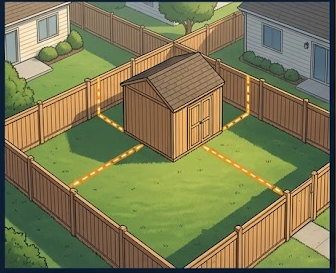
Setback lines extend from all four sides of a shed to the property boundary — violations can require forced removal even years after building.
What Is a Setback?
A setback is the minimum required distance between a structure and a property line, easement, right-of-way, or other boundary. For residential sheds, setbacks define how close your shed can be to your rear property line, your side property lines, and sometimes other structures on your lot.
Setbacks are set by your local zoning ordinance — a separate body of law from the building code that governs permit requirements. A shed can be fully exempt from a building permit and still be in violation of setback rules. Violating setbacks is a code violation that can be cited and enforced regardless of whether a permit was required or obtained.
Typical Setback Distances for Residential Sheds
| Boundary | Typical Setback | Notes |
|---|---|---|
| Rear property line | 5 feet | Most common in residential zones. Some jurisdictions allow 3 ft; others require 10 ft. |
| Side property lines | 5 feet | May be lower (3 ft) in some zones. Corner lots often have special rules for the street-side yard. |
| Front yard | Not permitted | Sheds almost universally prohibited in front yards in residential zones. Front yard defined as area between house and street. |
| From your house | No minimum (usually) | Most zoning codes don't set a minimum distance from the shed to the house — but fire separation and egress window clearance rules may apply. |
| From utility easements | Must not overlap | Sheds cannot be placed over or partially over any recorded drainage, utility, or access easement. |
| From alley (rear alley properties) | 5–10 feet | Properties with rear alleys often have a separate alley setback requirement. |
How to Find Your Local Setback Requirements
- Call your city or county planning department (not the building department — the planning or zoning department). Ask: "What are the setback requirements for detached accessory structures in my residential zoning district?" Have your address ready, as requirements can vary by zone even within the same city.
- Check your city's zoning code online — most cities publish their zoning ordinances on their website. Search for your zoning district and look for the section on "accessory structures" or "accessory buildings."
- Review your property's plat — your recorded property plat (available from your county recorder or assessor) shows easements and may show setback lines. Get the plat from your county's online records or from the title company when you purchased your home.
- Look at your deed or title report — some properties have deed restrictions or subdivision covenants that impose additional setbacks beyond the zoning requirements.
How to Measure Setbacks Correctly
Setback measurement seems straightforward but has several important nuances:
- Measure from the structure, not the foundation: Setbacks are typically measured from the outermost edge of the structure — including any roof overhang — to the property line. If your shed has a 12-inch roof overhang, the 5-foot setback from the property line means the shed wall must be 6 feet from the line, not 5.
- Know where your property line actually is: Fences, landscaping, and informal agreements with neighbors are not the property line. The legal property line is defined by your recorded survey or plat. If you're not certain where your property line is, having a licensed surveyor locate the corners is the safest approach before placing a shed.
- Check for easements: A shed can be the correct setback distance from the property line but still be over a utility or drainage easement that runs along the interior of your property. Review your plat for any easements before finalizing placement.
- Corner lots have two front yards: On a corner lot, the yard along each street is typically treated as a front yard — meaning your effective buildable area for sheds is limited to the interior rear portion of the lot.
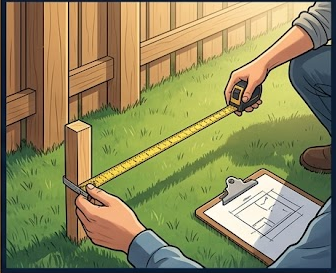
Always measure from the legal property line — not the fence. A licensed surveyor can locate your corners if you're uncertain.
Recommended: Fluorescent Yard Marking Flags — Mark Your Setback Lines Before You Build
Setback violations are the #1 reason sheds get ordered removed — often years after installation. Before placing any shed, mark your property line and measure your required setbacks with high-visibility marking flags. This 50-pack of fluorescent orange survey flags (4×5×15 inch, wire stems) lets you stake out exact setback distances so you can see the placement clearly before committing. Amazon's Choice · 4.7★ · 13,000+ reviews · under $10.
View Marking Flags on Amazon →As an Amazon Associate, we earn from qualifying purchases. This does not affect our editorial content.
Common Setback Violations and Their Consequences
Setback violations are cited more commonly than many homeowners realize. Common triggers include:
- Neighbor complaint (the most common trigger by far)
- Building inspector notice during a visit for an adjacent project
- Aerial/satellite imagery review by the planning department
- Discovery during a home sale title search
Consequences of a setback violation include:
- Citation and fine from the zoning enforcement office
- Requirement to relocate the shed to the correct setback distance
- In cases where relocation isn't practical: removal of the shed entirely
- Complications in selling your home if the violation is discovered during escrow
What If Your Lot Is Too Small for Standard Setbacks?
On a very narrow lot, standard setbacks may leave you with no room for a shed at all. In this situation, you have a few options:
- Apply for a variance: A variance is a formal exception to the zoning code's setback requirement. You apply to your city's Board of Adjustment (or Zoning Board of Appeals). Variances are discretionary — not guaranteed — and require demonstrating that strict compliance would create an undue hardship. The application process usually takes 1–3 months and involves a public hearing.
- Check for administrative exceptions: Some jurisdictions offer an administrative setback reduction for small sheds below a certain size (e.g., a 3-foot setback for sheds under 100 sq ft instead of the standard 5 feet).
- Choose a smaller shed: Some jurisdictions have reduced setbacks for smaller sheds — so downsizing your planned shed from a 10×16 to an 8×10 might bring you within the required setback.