What Is a Building Permit and Why Does It Apply to Sheds?
A building permit is a government authorization to construct, alter, or demolish a structure. It exists to ensure that buildings are safe — that they meet structural, fire, and electrical standards that protect both the occupant and neighboring properties. Building departments review plans before issuing permits and send inspectors during construction to verify that the actual work matches what was approved.
Residential sheds fall under the same permitting system as houses, additions, and garages — with one important difference. Because sheds are typically small, non-habitable, and low-risk, most jurisdictions exempt sheds below a certain size from the permit requirement entirely. This "size exemption" is the foundation of shed permit rules across the country.
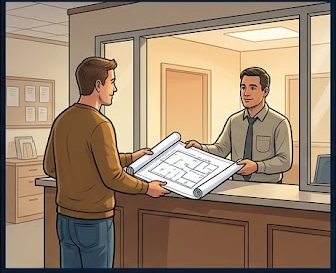
The permit application process typically involves submitting a site plan showing your shed location, dimensions, and setback distances.
The Size Threshold: The Most Important Number
Every state and most cities set a square footage threshold below which a detached residential accessory structure — like a shed — is exempt from a building permit. Below that threshold, no permit is required. Above it, a permit is required before construction begins.
These thresholds vary significantly by state and locality:
| State / City | Permit Exemption Threshold | Notes |
|---|---|---|
| Virginia | 256 sq ft | One of the most generous exemptions in the country |
| Most states (general) | 200 sq ft | The most common default across the U.S. |
| North Carolina | 144 sq ft (any dim ≤12 ft) | State baseline; Raleigh requires permit for all sheds |
| New York | 144 sq ft | Based on 12×12 dimension rule |
| California | 120 sq ft | CBC Section 105.2; some counties stricter |
| Georgia | 120 sq ft | State baseline; varies by county |
| Florida | 100–150 sq ft | Varies by county; all sheds must meet wind code |
| City of Austin, TX | 120 sq ft | Stricter than Texas general norm of 200 sq ft |
| City of Raleigh, NC | No exemption | Permit required for all sheds — strictest in NC |
| City of Denver, CO | No complete exemption | Zoning permit required for all sheds |
What Conditions Must Be Met for a Size Exemption?
Even when your shed is below the size threshold, most jurisdictions require that several conditions be met for the exemption to apply. These typically include:
- Single story: The shed must be one story only
- Detached: The shed must not be attached to your house or any other structure (attached structures are treated as additions)
- No utilities: No electrical, plumbing, or mechanical connections — adding any of these triggers separate trade permits and often a building permit even on small sheds
- Non-habitable: The shed cannot be used as a living space, office, sleeping area, or any habitable use
- Not in a flood hazard area: Sheds in FEMA-designated Special Flood Hazard Areas (SFHA) typically require a permit regardless of size
- Setback compliance: Even permit-exempt sheds must comply with local setback rules (more on this below)
What Automatically Triggers a Permit Regardless of Size
Even if your shed is below the size threshold, several factors will trigger a permit requirement in virtually every U.S. jurisdiction:
1. Electricity
Adding any electrical service to a shed — even a single outlet or a single light — requires an electrical permit in every state. In most jurisdictions, adding electricity to a shed also triggers a building permit, because the building inspector needs to sign off on the completed structure before the electrical inspector can close the electrical permit. There are no states where running power to a shed is a no-permit activity.
2. Attachment to the House
If your shed shares a wall with your house, is connected to your house's roof, or is structurally attached to your house in any way, it's no longer treated as an accessory structure — it's treated as a home addition. Home additions require a full building permit regardless of size.
3. Plumbing or HVAC
Adding plumbing (a sink, a bathroom, a utility connection) or any HVAC system to a shed requires trade permits. This often also triggers a building permit for the structure itself.
4. Flood Zone
If your property is in a FEMA Special Flood Hazard Area (SFHA) — commonly called a "100-year floodplain" — any permanent structure, including a small shed, typically requires a permit. The flood zone permit process includes floodplain elevation requirements and may require the structure to be elevated above the Base Flood Elevation (BFE).
5. Habitable Use
Building a shed for use as a home office, studio, guest sleeping space, or any other habitable use changes the permit classification entirely. Habitable structures have different fire separation, insulation, egress, and structural requirements than storage sheds.
Setback Requirements: The Rule That Applies to Every Shed
This is where many homeowners get surprised. Setback requirements are minimum distances your shed must maintain from property lines, easements, and other structures. They come from your local zoning code, not from the building code. This means setbacks apply even if your shed is exempt from a building permit.
Typical residential accessory structure setbacks in the U.S.:
- Rear property line: 3–10 feet (5 feet is most common)
- Side property lines: 3–5 feet
- From easements: No structures may be built over drainage, utility, or access easements
- Front yard: Sheds are prohibited in front yards in almost all residential zones
Violating setbacks is a serious issue. Even years after a shed is built, a zoning violation can be cited if a neighbor complains or if the property is sold. Forced relocation or removal of an out-of-setback shed is a real and relatively common outcome. Measure twice before you place.
Zoning Permit vs. Building Permit: What's the Difference?
These two terms are often confused, and some jurisdictions require both while others combine them:
- Building permit: Authorizes the construction of a structure and ensures it meets structural and safety codes. Involves plan review and inspections.
- Zoning permit: Confirms that the proposed structure's location and use comply with local zoning regulations (setbacks, height limits, lot coverage). Simpler than a building permit — often just a form and a site plan.
In many jurisdictions, the zoning review is built into the building permit process. In others — including Raleigh, NC and Denver, CO — zoning permits are issued separately and may be required even for small sheds that don't need a building permit.
How to Find Your Local Shed Permit Rules
The fastest and most reliable way to find the rules that apply to your specific property:
- Call your local building department. Ask: "I'm planning to install a detached storage shed on my residential property. What are the permit requirements, size thresholds, and setback rules for my zoning district?" Have your address ready.
- Use your city or county's website. Search "[your city] building permit" or "[your city] accessory structure permit." Most building departments post their threshold and process online.
- Use our state guides. Our state pages cover the statewide baseline and major city/county variations for all 50 states. Use the state guide index to find your state.
- Take our quiz. Our 60-second permit quiz uses statewide defaults to give you a starting-point answer for your state.
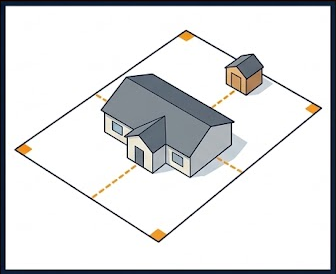
A simple site plan shows your lot boundaries, house footprint, and the proposed shed with setback distances labeled — required for most permit applications.
Recommended: Fluorescent Yard Marking Flags — Mark Your Setback Lines Before You Build
Setback violations are the #1 reason sheds get ordered removed — often years after installation. Before placing any shed, mark your property line and measure your required setbacks with high-visibility marking flags. This 50-pack of fluorescent orange survey flags (4×5×15 inch, wire stems) lets you stake out exact setback distances so you can see the placement clearly before committing. Amazon's Choice · 4.7★ · 13,000+ reviews · under $10.
View Marking Flags on Amazon →As an Amazon Associate, we earn from qualifying purchases. This does not affect our editorial content.